
Advancing
bioelectric medicine.
AI-native discovery. FDA-cleared pain devices.
Electrome connects scientific evidence, signal modeling, and controlled experiments to investigate new bioelectric therapies through its MATRIX Discovery platform, guided by human scientific review.
Our pain devices are FDA-cleared. Infection and cancer applications are investigational, not cleared or available treatments.
- FDA Cleared
- 510(k) Devices
- 27.12 MHz
- Nonthermal PSWT
- 720 hr
- Continuous Therapy
- AI-Native
- MATRIX Discovery
- Bioelectric FrontiersDecades of peer-reviewed PSWT research, productized.
- MATRIX DiscoveryOperating internal AI-native R&D software connecting evidence, candidate ranking, modeling, controlled experiments, and validation under a human scientific release gate.
- Regulated DevicesActiPatch® is FDA 510(k) cleared for adjunctive treatment of musculoskeletal pain. Other applications remain separate research directions.
- Provider + Retail NetworkDistribution through clinics, retailers, and direct to consumer.
Precision Bioelectric Therapeutics: Pain, Infection, and Cancer
Cells use small electrical signals to coordinate pain, inflammation, and repair. Electrome studies those signals and turns proven findings into devices. Pain is where we work today.
Infection and cancer are research directions. They are not FDA-cleared indications or available treatments, and current device clearances do not extend to them or to the research platform.
- Available today
FDA-cleared pain devices
ActiPatch® is FDA 510(k) cleared for adjunctive treatment of musculoskeletal pain and sold over the counter.
See products - Internal research
MATRIX Discovery and lab work
Operating internal research and development (R&D) software and controlled preclinical experiments, reviewed by Electrome scientists. Not an external offering.
How research works - Future research
Infection, cancer, and MATRIX System
Investigational directions only. Not FDA-cleared, not diagnostics, and not available treatments.
Read the vision
ActiPatch® for musculoskeletal pain.
FDA 510(k) cleared (K192234), drug-free wearable for over-the-counter adjunctive treatment of musculoskeletal pain.
It uses pulsed shortwave therapy (PSWT), a low-level, nonthermal radio-frequency signal, delivered through a drug-free wearable for up to 720 hours.

ActiPatch® is developed and manufactured by BioElectronics Corporation and marketed by Electrome under an exclusive license.
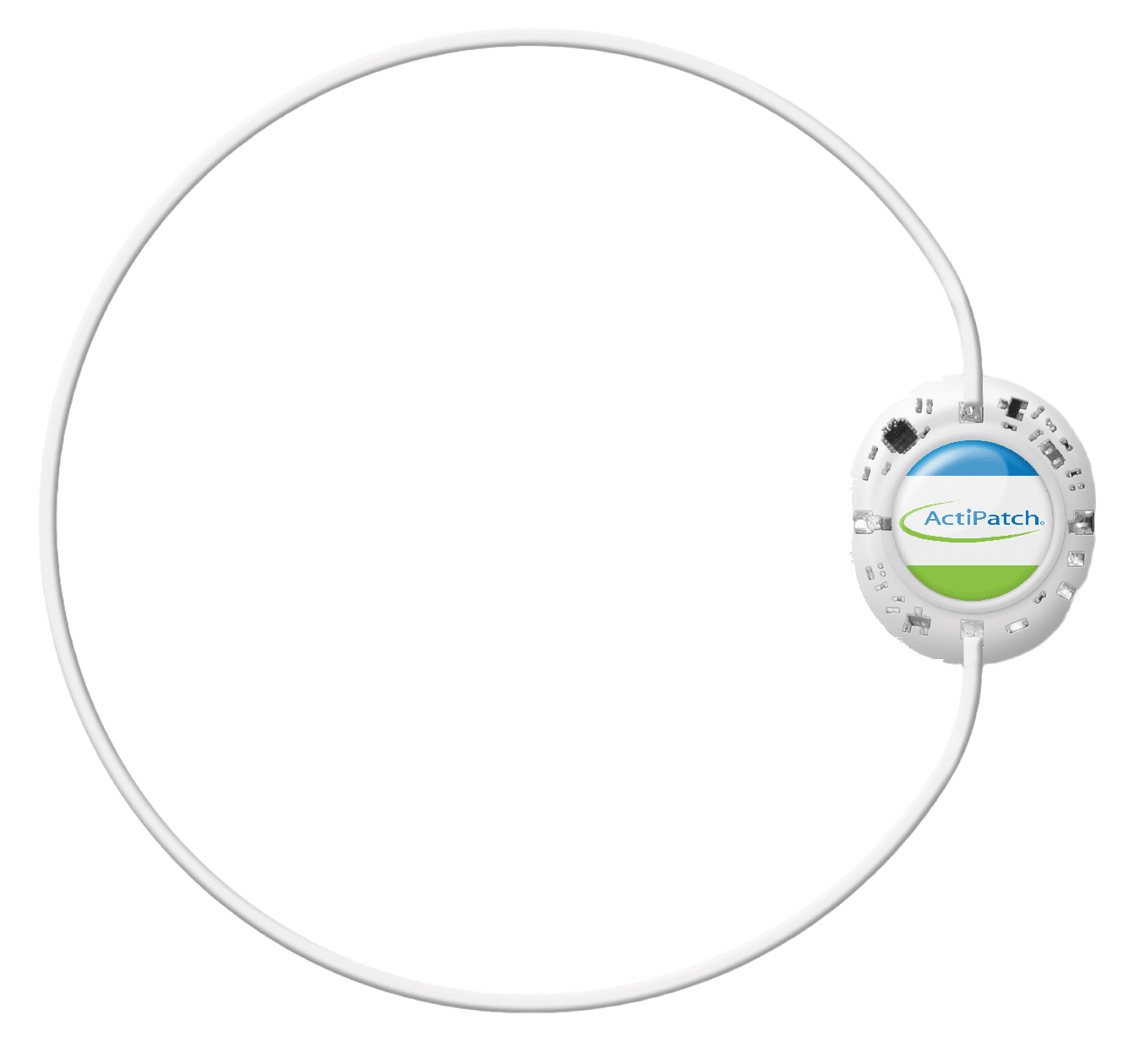
Standard loop: 12 cm (4.7 inches) in diameter.
AI speeds the work. Scientists make the calls.
MATRIX Discovery is our internal, AI-native research software. It helps scientists review evidence, rank candidate signals, and plan controlled experiments. People decide what is tested, what the results mean, and what moves forward.
- Step 01Question
Scientists define what to test and why.
- Step 02Evidence
AI tools gather and rank published findings.
- Step 03Model
Models compare candidate signal settings.
- Step 04Experiment
Controlled lab tests measure real effects.
- Step 05Review
Scientists decide to replicate, publish, or stop.
Highlighted steps are led by scientists. AI-assisted steps feed into their review.
Evidence: a peer-reviewed laboratory result.
A platform-selected candidate produced a measurable, replicated in-vitro result on the first day of experiments; peer-reviewed publication followed approximately six months after the initial laboratory work. The work was published as Arresting spirochetes: nonthermal extremely low-frequency electromagnetic field exposure suppresses Borrelia burgdorferi motility in vitro.
The complete author group is Erik A. Nilsen, Heather Adkison, John R. Martinez, Nevena Zubcevik, and Monica E. Embers. Dr. Embers's current affiliation is Division of Immunology at the Tulane National Biomedical Research Center, Tulane University.
This preclinical in-vitro result does not establish a Lyme disease treatment, cure, clinical efficacy, or use in people. No Electrome product is cleared or marketed for Lyme disease or any infectious condition. DOI: 10.3389/fmed.2026.1886935.
From selection to publication



Next steps
Investors can request materials. Providers, retailers, and researchers can reach our team directly.